For generations, builders have relied on wood for everything from barns to homes. But engineered steel has changed the equation, especially for the durable, low-maintenance buildings that hold up to Maine winters. So when you are planning a garage, workshop, agricultural building, or even a home, which material is actually better: steel or wood?
The honest answer is that it depends on your project, your budget, and your climate. This guide compares steel and wood construction head to head so you can decide what makes sense for your build in Maine and New England.
The Case for Wood Construction
Wood has real advantages, which is why it has been the default for so long:
- Familiar and widely available: nearly every contractor knows how to build with it, and materials are easy to source locally.
- Lower upfront cost on small structures: for a small shed or simple outbuilding, a stick-built approach can be inexpensive.
- Easy to modify on site: framing can be cut and adjusted with common tools.
- Traditional look: some owners simply prefer the warmth and appearance of a wood-framed building.
The tradeoffs show up over time. Wood is vulnerable to rot, insects, warping, and fire, and it generally requires more maintenance and more frequent repairs than steel.
The Case for Steel Construction
Engineered steel buildings are designed to solve the weaknesses of traditional framing:
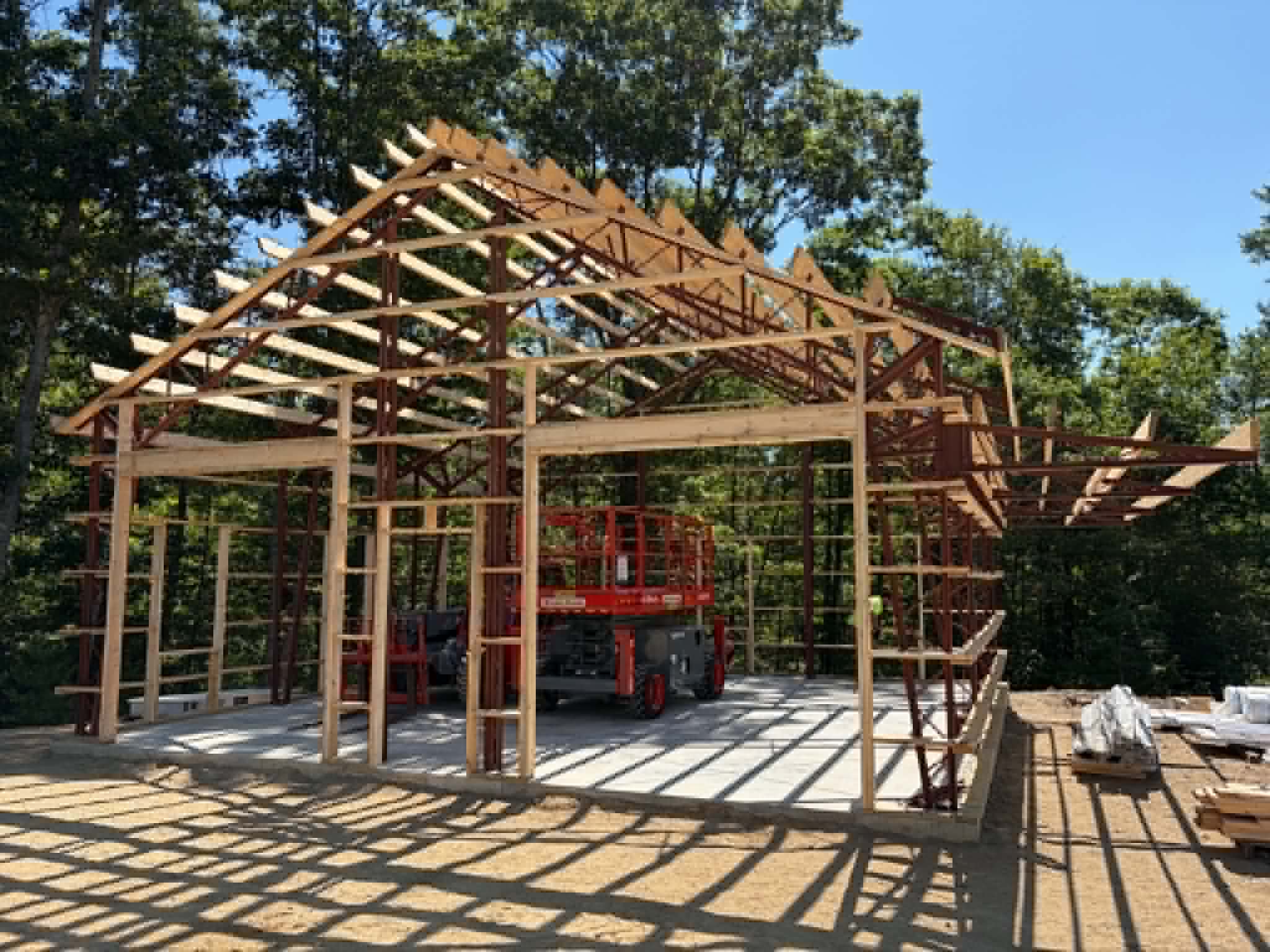
- Strength and clear spans: steel can span wide distances with no interior support posts, giving you a fully open floor plan.
- Resistant to rot, pests, and fire: steel does not feed termites, absorb moisture, or burn the way wood does.
- Dimensional stability: steel will not warp, twist, or shrink as it ages.
- Faster to erect: pre-engineered components arrive ready to assemble, which shortens the build.
- Long lifespan and low maintenance: a properly installed steel building can perform for decades with minimal upkeep.
As an Authorized Worldwide Steel Buildings Dealer and Installer, C & H Steel Builds specializes in engineered steel systems built for exactly these advantages.
Durability in Maine’s Climate
This is where the comparison really matters for New England owners. Heavy snow, high winds, freeze-thaw cycles, and long stretches of moisture put serious demands on any structure.
Engineered steel buildings are designed and certified for local snow and wind loads, and they will not rot, warp, or lose strength from years of Maine weather. Wood framing can sag under repeated snow load, absorb moisture, and require ongoing treatment to fight rot and pests. For a building that needs to stand strong through decades of hard winters, steel has a clear edge.
Cost: Upfront and Over Time
On a very small structure, wood can win on sticker price. But as buildings get larger, steel becomes more competitive, and often more economical, because it spans farther with less material and less labor. Just as important is the lifetime cost: steel’s low maintenance and long lifespan usually make it the better value over the years, once you factor in the repainting, repairs, and pest control that wood can require.
For a full breakdown of what steel buildings cost in our area, see our guide on how much a steel building costs in Maine.
Maintenance and Longevity
Steel buildings are about as low-maintenance as construction gets: an occasional wash and inspection is often all they need. Wood structures ask for more, such as periodic sealing or painting, pest monitoring, and repairs to any framing that rots or warps. Over a 30 or 40 year horizon, that difference adds up in both time and money.
Speed of Construction
Because steel building components are engineered and fabricated before they reach your site, assembly tends to move faster and with fewer weather delays than traditional framing. If you are trying to get a workshop up before winter or expand a business on a deadline, that speed is a real advantage.
Design Flexibility and Open Space
Steel’s clear-span capability means no interior columns getting in the way, which is ideal for agricultural buildings, commercial facilities, garages, and workshops that need wide open interiors. Wood framing typically requires interior supports for larger spans, which limits how you can use the space.
So, Which Is Better?
For a small shed or a project where a traditional wood look is the priority, stick-built construction can be a fine choice. But for durable, low-maintenance, wide-open buildings that need to handle Maine’s climate, whether that is a commercial building, an agricultural structure, a garage, a workshop, or a barndominium, engineered steel is usually the stronger long-term investment.
The best answer depends on your specific project. C & H Steel Builds can walk you through the options for your build across Maine and all of New England and help you choose what fits your goals and budget.
Ready to Compare Options for Your Build?
Tell us about your project and we will help you weigh the right materials and design, then put together a clear quote built around your property and your plans.